How Custom Website Development Helps Businesses Grow Online
Having a website is no longer just an option for businesses. Customers often visit a company's website before deciding whether to contact it, purchase a product, or explore its services. This makes a professional online presence an important part of business growth. Custom website development helps businesses create websites that match their specific goals, customer expectations, and functional requirements.
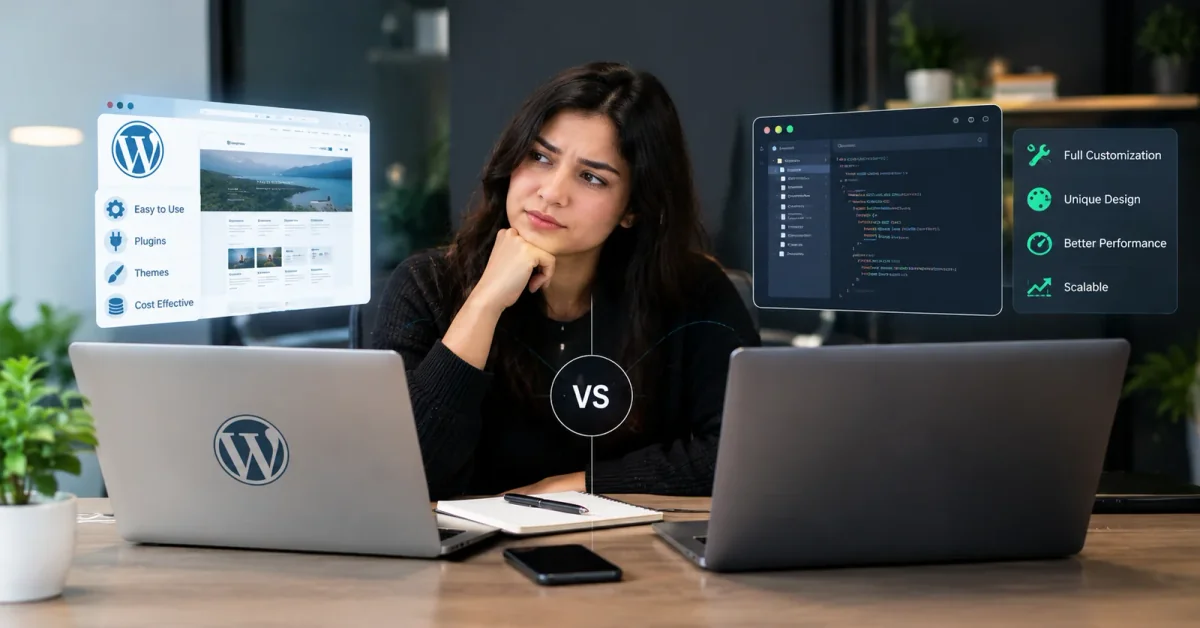
While ready-made website solutions work well for many projects, some businesses need more flexibility and control. A customized website allows companies to build an online experience around their brand instead of adjusting their requirements to an existing template.
Let's explore how a well-developed website can support business growth and improve the way customers interact with a brand.
1. Creates a Unique Brand Identity
Every business has something different to offer. However, using similar website templates can sometimes make brands look alike.
Custom website design gives businesses the freedom to create layouts, colors, typography, and visual elements that represent their identity. This helps visitors recognize the brand and understand what makes it different.
For example, a creative agency may need an interactive portfolio, while a manufacturing company may require detailed product pages and inquiry forms. A customized design can accommodate these different requirements.
As a result, businesses can create a website that communicates their services more effectively and leaves a stronger impression on visitors.
2. Improves User Experience and Navigation
A good website should make it easy for visitors to find what they are looking for. Complicated navigation, unclear information, and confusing layouts can discourage potential customers.
Custom website development allows businesses to organize pages and features according to their audience's needs. Developers can create simple navigation menus, clear service sections, contact forms, and helpful calls to action.
Additionally, businesses can design user journeys that guide visitors from discovering a service to making an inquiry.
For instance, an online service provider can include dedicated service pages, customer testimonials, and inquiry options in relevant sections.
This makes the browsing experience more convenient and helps visitors interact with the business.
3. Supports Better Website Performance
Website performance affects how visitors experience a business online. Slow loading pages, broken links, and poorly designed layouts can create frustration.
With custom web development, developers have greater control over the website's code and technical structure. They can focus on necessary features and avoid adding unnecessary functionality.
However, website speed also depends on hosting quality, image optimization, caching, and regular technical maintenance.
A well-optimized website can make browsing smoother, improve accessibility, and help visitors find information without unnecessary delays.
Therefore, performance should be considered from the beginning of the website development process rather than treated as a later improvement.
4. Provides Flexibility for Business Requirements
Different businesses have different operational needs. A simple company website may only require service pages and contact information. In contrast, an eCommerce business might need product filters, payment gateways, inventory management, and customer accounts.
Custom website development makes it possible to build features around these specific requirements.
For example, a healthcare business may need an appointment booking system, while a real estate company may require property listings and enquiry management.
Instead of relying entirely on existing features, businesses can develop functionality that supports their actual operations.
This flexibility can also reduce unnecessary features that make a website more complicated to manage.
5. Makes Future Business Expansion Easier
Business requirements rarely remain the same forever. As a company grows, it may need additional services, new website sections, advanced integrations, or customer management features.
A properly planned business website development strategy considers these future requirements.
Custom-built websites allow developers to plan the technical structure around the business's expected growth. New functionality can be introduced according to changing needs.
For example, a company that initially offers a few services may later expand into multiple locations or introduce an online booking system.
Having a flexible website structure can make these improvements easier to manage.
However, scalability also depends on good development practices, hosting infrastructure, and ongoing technical support.
6. Helps Create a Mobile-Friendly Experience
Many customers browse business websites through smartphones. Therefore, a website should work smoothly across different screen sizes and devices.
Responsive website design adjusts page layouts, images, menus, and other elements according to the visitor's screen.
With custom website development, developers can create layouts that suit the specific content and functionality of a business website.
For example, important contact details and enquiry buttons can be made easier to access on mobile screens.
A consistent experience across desktops, tablets, and smartphones helps visitors interact with the website more comfortably.
7. Supports Long-Term SEO Efforts
A website needs more than attractive visuals to reach potential customers. It should also have a structure that search engines can understand and visitors can navigate easily.
Professional website development can support SEO by providing:
Clear page structures and heading hierarchy.
Mobile-friendly layouts.
Fast-loading pages.
Descriptive URLs.
Proper image optimization and alternative text.
Technical elements that support search engine crawling.
However, website development alone does not guarantee higher search rankings. Quality content, relevant keywords, backlinks, and ongoing SEO activities are also important.
When technical development and SEO work together, businesses can build a stronger foundation for long-term organic visibility.
When Should a Business Consider Custom Website Development?
Not every business needs a completely customized
website. The decision should depend on its requirements and future plans.
Custom development may be worth considering when:
Your business needs unique website functionality.
Existing templates cannot support your design requirements.
You require specific third-party integrations.
Your website needs advanced booking or customer management features.
You are planning significant digital expansion.
Before starting, it is useful to define your goals, expected features, budget, and maintenance requirements. This helps developers understand the project and recommend an appropriate solution.







Comments (0)
No comments yet. Be the first to comment!